





Manto’s “Toba Tek Singh”
“The fundamental questions Manto asked about the nature of the postcolonial transition continue to resonate today as like him we try unsuccessfully to exorcise the ghost of partition: weren’t the basic problems confronting Indians and Pakistanis the same?”

Saadat Hasan Manto





“Whose blood is being shed with such heartlessness every day?”, the Urdu short story writer Saadat Hasan Manto rued as he tried making sense of the independence celebrations in Bombay on August 14, 1947. Pakistan and India had been declared separate countries. There was public rejoicing: cries of “Hindustan Zindabad” and “Pakistan Zindabad” struck a discordant note with a frenzy of murder, rape and arson in the name of religion. Confused and disoriented, Manto could not decide whether India or Pakistan was his homeland. “Where would they burn or bury the bones from which the vultures had stripped off the flesh of religion?” And now that they were free of servitude, what would the people of the subcontinent dream of? Would they have their own slaves now? To each of these big questions, there was an Indian answer, a Pakistani answer, and a British answer. The batwara or partition may have divided lives and drawn lines of blood in the hearts and minds of people. But the arbitrary lines drawn by the British on the map were not visible to anyone’s eye. Some things could never be divided, like the common literary heritage of the subcontinent and bonds of friendship. The pity of partition was not that instead of one country there were now two—independent India and independent Pakistan—but that “human beings in both countries were slaves, slaves of bigotry . . . slaves of religious passions, slaves of animal instincts and barbarity.”
Baffled by the furies let loose by the advent of a much-vaunted freedom, Manto left Bombay in January 1948 for Lahore with more questions than answers: “Should we wash our hands of humanity?” “Have we lost faith in that thing called conscience?”, he wondered. Partition’s unpardonable horrors were a blot on the face of humanity. The fanfare of official nationalism covered up the tragedy of partition with the result that human bestiality was finding perfect ground for nurture to become ever more audacious in its expression. Not a day passed without a human being getting killed by a fellow human being. “Why are these few individuals so murderous,” and “why are their hearts and minds so possessed by murder and violence?”
 The fundamental questions Manto asked about the nature of the postcolonial transition continue to resonate today as like him we try unsuccessfully to exorcise the ghost of partition: weren’t the basic problems confronting Indians and Pakistanis the same? Was Urdu going to become extinct in India and what form would it take in Pakistan? Would Pakistan become a religious state? Would loyalty to the state confer citizens the right to freely criticize the government? The paradox of freedom from colonial rule in the subcontinent that Manto’s discerning literary gaze captured so evocatively has mutated over the past seven and a half decades into bewildering permutations and combinations. Partition may have become a distant memory for many and its invocations in public discourse limited to scoring points on the grid of patriotism. But its absent presences in everyday life across the great divide of 1947 are indicators of its historical significance not merely as an event that occurred more than seventy-five years ago but a process that is very much part of the present. An ongoing process with neither end nor beginning, partition structures the post-colonial South Asian experience. An institutionalized form of dividing and disconnecting, partition has been the founding myth of post-colonial nation-states and ferrets out people, communities, and linguistic cultures that were once historically indivisible. If there are multiple slippages, elisions, and contestations in narratives about the great divide that occurred over seventy-five years ago, there have been awkward silences about its constant reenactments in the post-colonial nation-states of South Asia.
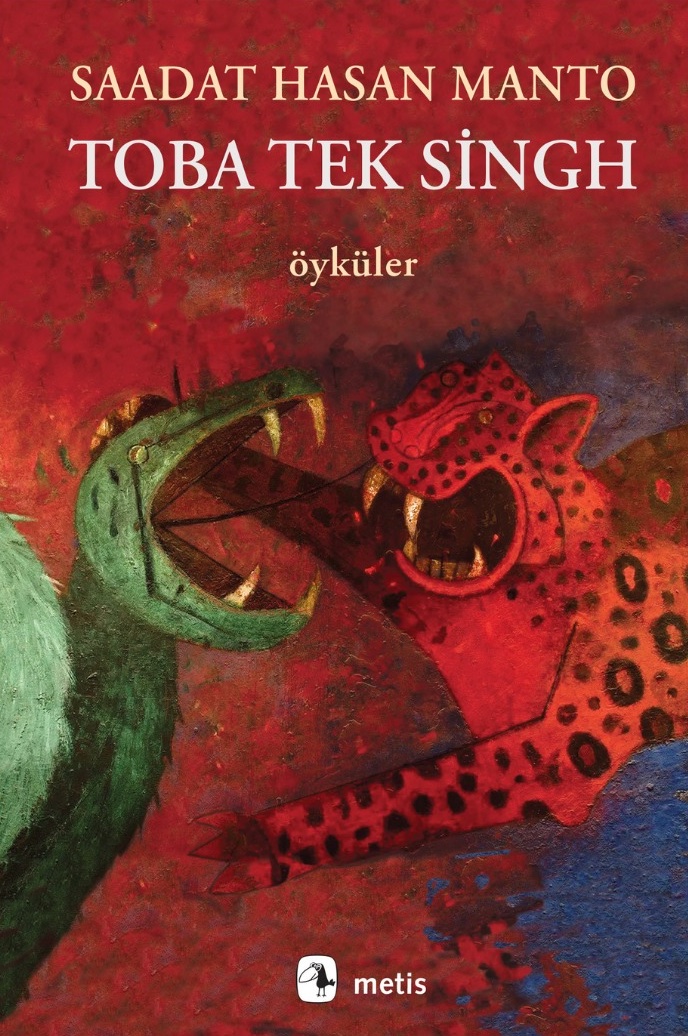
Many of these silences are subtly broken in Manto’s internationally acclaimed short story “Toba Tek Singh”, translated from Urdu into Turkish and published. Written in 1954 during what was his most productive period of creative writing, the story is a scathing comment on the absurdity of partition and the policy of the two postcolonial states to split up the inmates of the mental asylum in Lahore according to their religious affiliation. In a severe indictment of the wisdom of partition, the inmates of the asylum are portrayed to be of sounder mind than those making decisions for their removal. One of them climbs up a tree, vowing to live there rather than in either India or Pakistan. The main character Bishan Singh, a Sikh from the town of Toba Tek Singh in Punjab, has been standing on his legs since the day he was admitted to the asylum fifteen years ago. Upon learning that his hometown is in Pakistan, Bishan Singh refuses to relocate to India. Even after he hears that his family has safely moved to India, Bishan Singh is adamant about returning to his hometown where he owns some land and property. On the day of the exchange, the lunatics are transported to the India-Pakistan border at Wagah. Bishan Singh tries running away but is overpowered by the border guards. He stubbornly refuses to cross over to India, standing in no-man’s land until exhausted, he collapses on the ground.
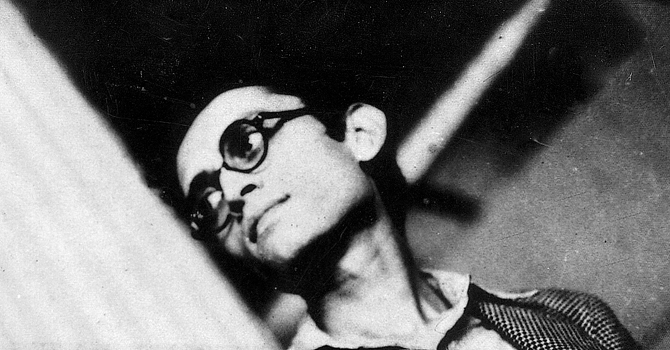
Considered by many to be Manto’s best partition story, “Toba Tek Singh” is a compelling metaphor: the madness outside the asylum is more serious than the insanity within. Like his other partition stories that are based on first-hand accounts of the suffering and misery of forced displacement he heard during his visits to refugee camps, Manto was inspired to write “Toba Tek Singh” after spending time in the Lahore mental asylum, the pagalklhanna as it was called in local parlance, and the only place with facilities for the treatment of alcoholism. His institutionalization was rumored as madness but the only insanity afflicting him was alcoholism. A heavy drinker before partition, the mental anguish he suffered from the dislocations and trauma of 1947 turned him into an alcoholic and led to his untimely death at the young age of 43.
Manto is mostly remembered for his sensitive representation of the human tragedy of India’s partition. But even without partition, his pre-partition short stories “like Hathak” (translated into English as “The Insult”) and “Naya Qanun” (the “New Constitution”) would have earned him a place in the pantheon of acclaimed Urdu short story writers.[1] Beyond partition, he found ample contradictions in the postcolonial moment that his roving eye, fearless mind, and vibrant pen could not avoid detecting and exposing to the fullest. One intrinsically linked to “Toba Tek Singh” was the hypocrisy of the Lahore mental asylum officials and staff who while claiming to be working for the well-being of the inmates denied them their due. The asylum has a range of facilities for the inmates such as cows and chickens to provide fresh milk and eggs, but none are ever made available to them. Official complicity ensures that amenities meant for the inmates are appropriated by members of the staff. Irked by a spectacle that was to soon pervade state institutions of the newly created post-colonial state, Manto wrote exposés of the corruption prevalent at the Lahore mental asylum. He was chided for doing so by an elder family relative on the staff of the asylum. Undeterred, Manto continued writing such articles for newspapers like the Urdu daily Imroze where he worked in the initial years after partition.
There is much more to Manto than his acknowledged classic “Toba Tek Singh”. He merits a wide international readership because of his inimitable flair for anticipating social, political, and intellectual trends, which gives his work a timelessness that is both awe-inspiring and eerie. Consider the poignancy of these words from “Toba Tek Singh”:
As to where Pakistan was located, the inmates knew nothing…the mad and the partially mad were unable to decide whether they were in India or Pakistan. If they were in India where on earth was Pakistan…It was also possible that the entire subcontinent of India might become Pakistan. And who could say if both India and Pakistan might not entirely vanish from the map of the world one day?
Far from being an apocalyptic vision, this was Manto questioning the validity of a spurious division based on religion. With a blood-soaked partition concretized and memorialized by two hostile nuclear states, only time will tell whether future generations will come to read these lines of Manto as a prophetic warning.
[1] Hamid Jalal, Blackmilk, Lahore: Sang-e-Meel, 1997.
* Parts of this are excerpted from Ayesha Jalal, The Pity of Partition: Manto’s Life. Times and Work Across the India Pakistan Divide, Princeton: Princeton University Press, 2013.
Önceki Yazı

Sinek Sarayı ile Bit Palas:
İntihal tespiti amacıyla bir karşılaştırma
Yazar, çevirmen, edebiyat yayıncısı Cem Akaş, Mine G. Kırıkkanat’ın Sinek Sarayı (1990) ve Elif Şafak’ın Bit Palas (2002) adlı romanlarını intihal tespiti amacıyla karşılaştırıyor...
Sonraki Yazı
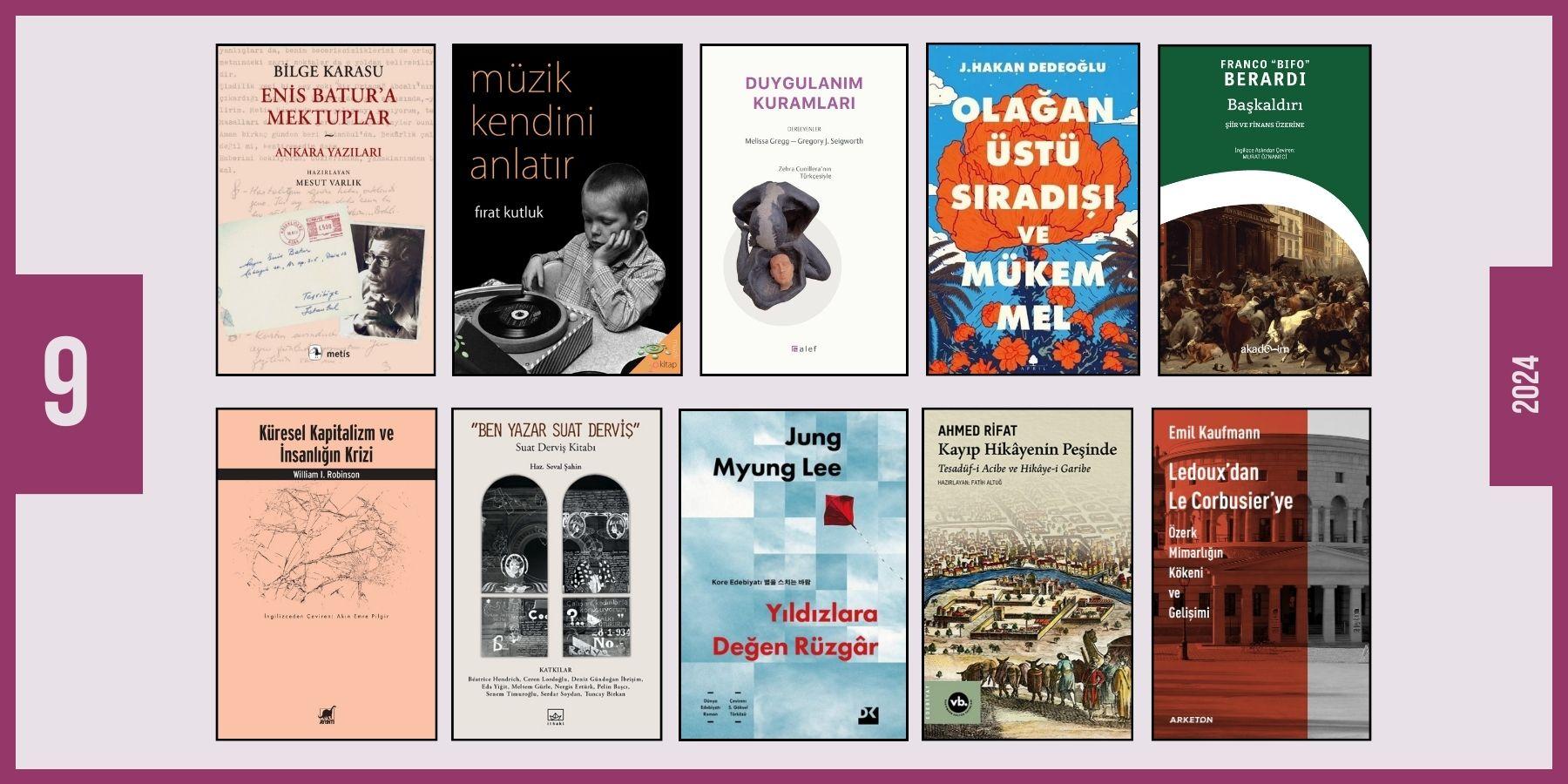
Haftanın vitrini – 9
Yeni çıkan, yeni baskısı yapılan, yayınevleri tarafından bize gönderilen, dikkatimizi çeken; okumak ve üzerine yazmak için ayırdığımız bazı kitaplar: Başkaldırı / “Ben Suat Derviş” / Duygulanım Kuramları / Enis Batur’a Mektuplar / Küresel Kapitalizm ve İnsanlığın Krizi / Ledoux’dan Le Corbusier’ye / Müzik Kendini Anlatır / Olağanüstü Sıradışı ve Mükemmel / Kayıp Hikâyenin Peşinde / Yıldızlara Değen Rüzgâr